
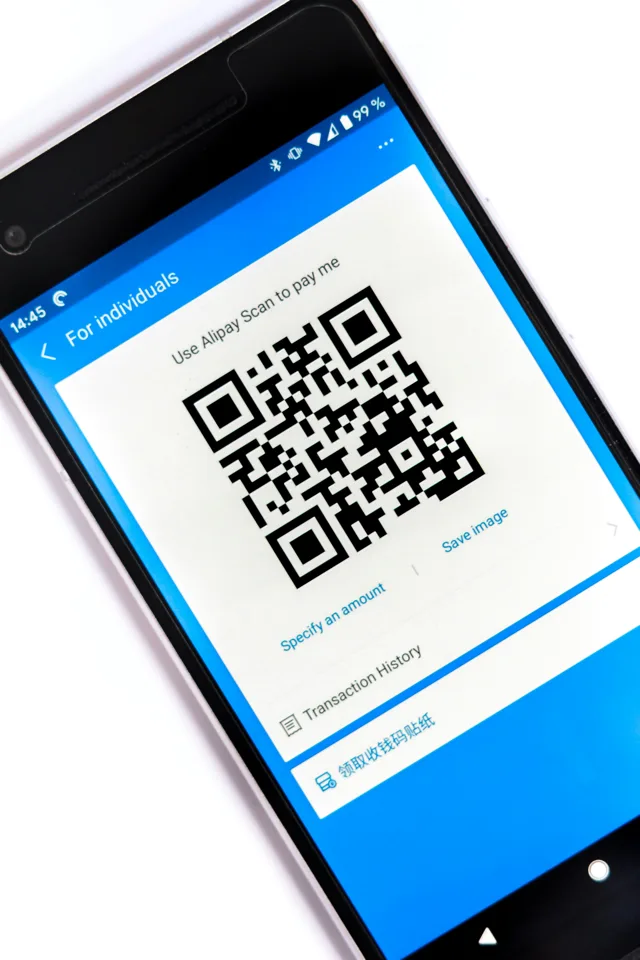
Treat payment in China as a redundancy problem. Your first wallet will work most of the time, but a bank check, weak signal, merchant preference or large purchase can still interrupt the flow. Build backups before the trip, not at the counter.
Short-term visitors can use the major QR wallets with international cards, while cash and physical cards remain useful for edge cases. The smoothest setup is ready before your first taxi, metro ride or hotel deposit.
The four-layer payment stack
Do not think of this as choosing one perfect payment method. Think of it as assigning each method a job, so one failure does not stop the day.
| Layer | Primary job | Where it saves you |
|---|---|---|
| Main QR wallet | Restaurants, taxis, shops, metro and daily spending | Most normal transactions under a few hundred yuan |
| Second QR wallet | Merchant preference and social/contact payments | When the first wallet is refused or a mini-program lives in the other app |
| Physical card | Hotels, deposits, airports, chains and high-value payments | When app or issuer limits make QR payment awkward |
| RMB cash | Signal failures, rural edges, tiny buses and emergencies | When your phone, bank or wallet stalls |
Build the stack before departure
Do not arrive with one payment method. China is easy once your QR apps work, but the first card verification, a weak data signal, or a merchant that only supports one wallet can still stall you. Set up this stack before departure:
| Layer | Use it for | Set it up when? |
|---|---|---|
| Alipay | Default visitor wallet and travel mini-apps | At home, before you fly |
| WeChat Pay | Second wallet, restaurants, small shops and WeChat contacts | At home, as backup |
| Physical Visa/Mastercard | Hotels, deposits, airports and larger retailers | Bring two cards if possible |
| RMB cash | Signal failures, small buses, rural stops and emergencies | ATM or exchange on arrival |
For the screen-by-screen Alipay card-binding flow, use the dedicated Alipay for foreigners guide. This page is the broader payment plan: which method to use, what limits to expect, and where backups matter.
After setup, run a readiness check in each wallet: pay-code screen opens, the right card is selected, and your bank can still reach you for fraud or 3D Secure approval while you have normal SMS, email and banking-app access.
Fees and large-payment planning
China has raised the national mobile-payment ceilings for overseas visitors, but the number that matters at the counter can still depend on your wallet verification, card issuer and merchant category.
| Payment issue | Planning rule | Fallback |
|---|---|---|
| Small daily purchases | QR wallet is fastest; many foreign-card payments under ¥200 avoid service fees | Second wallet or cash |
| Large hotel or luxury payment | National mobile-payment ceilings are higher, but app and bank checks may still interrupt | Physical card at the desk |
| Bank fraud check | Your issuer can block a first China wallet charge even if the app is set up correctly | Approve in bank app or switch card |
| No mobile data | QR payment usually needs a live connection | Cash or physical card |
The State Council's 2024 payment-service guide says overseas visitor mobile-payment caps were raised to US$5,000 per transaction and US$50,000 per year. Treat those as national ceilings, not a promise that every app, bank card or merchant will approve a large QR payment on the first try.
When payment fails at the counter
| What happened | Likely cause | Fast move |
|---|---|---|
| QR will not load | Weak data or app session expired | Switch data route, restart app, then use cash |
| Merchant says no | They prefer the other wallet or cannot process foreign-card wallet payments | Try the second QR wallet |
| Bank alert appears | Issuer fraud check or 3D Secure approval | Approve in banking app or use another card |
| High-value payment rejected | Wallet, card or merchant limit | Use physical card, split payment only if merchant agrees |
| Tiny place refuses cashless fallback | Device, signal or merchant habit | Use RMB cash |
QR payments need a stable connection, and busy areas can choke a weak signal. Sort your connectivity before you rely on app payments — see our Internet & VPN guide for the eSIM and SIM options.
Payment backup questions
What payment methods should I bring to China?
Bring a layered setup: one main QR wallet, one backup QR wallet, two physical international cards, and ¥500–1,000 in RMB cash. The apps handle daily spending; cards cover hotels and deposits; cash is the emergency fallback.
Can I travel in China with only cash and cards?
Technically yes, but it is awkward. RMB cash is legally accepted and physical cards work at many hotels, airports and large stores, but taxis, food stalls, markets, metro services and small restaurants are built around QR payment. Set up at least one wallet before arrival.
Should I use Alipay or WeChat Pay first?
Most short-term visitors should set up Alipay first because the visitor flow and travel mini-programs are easier to navigate. WeChat Pay is still worth preparing as the second wallet because many restaurants, small shops and local contacts expect WeChat.
How much cash should I carry in China?
Carry ¥500–1,000 for backup, split between your wallet and luggage. You should not need cash often in major cities, but it helps when mobile data is weak, a QR payment fails, a rural bus does not scan, or your bank blocks a transaction.
What causes payment failures in China?
The usual causes are weak mobile data, a bank fraud check, a merchant that prefers the other wallet, a transaction above the app or card limit, or an older card that does not support the required verification. This is why you want two apps, two cards and some cash.
What are the visitor payment limits?
The published national ceiling for overseas visitor mobile payments is US$5,000 for one transaction and US$50,000 in a year. Treat that as an outer limit: your wallet verification, card issuer, merchant category and fraud checks may still make the practical limit lower.
What should I test before flying to China?
Open each wallet, confirm it reaches the pay-code screen, check that the intended card is selected, and make sure bank alerts will reach you while travelling. Also install a China-ready data option, because QR payments need a live connection.
Payment guidance check: 8 July 2026, against official visitor-payment guidance, wallet provider materials and current payment-stack planning assumptions. Confirm in-app before any unusually large QR payment.
- GUIDEState Council English payment-service guide for overseas visitors, including mobile-payment ceilings and cash/card acceptance notes — payment service guide.
- WALLETSAlipay and WeChat Pay provider materials for foreign-card wallet setup and in-app payment flows.
- FIELDCathayGuide desk notes on payment failure modes: weak data, bank checks, merchant wallet preference and large-payment fallbacks.
Disclosure — this payment overview links mainly to official wallet and government resources. Commercial relationships elsewhere on CathayGuide do not affect the backup-stack order above. Editorial policy.