
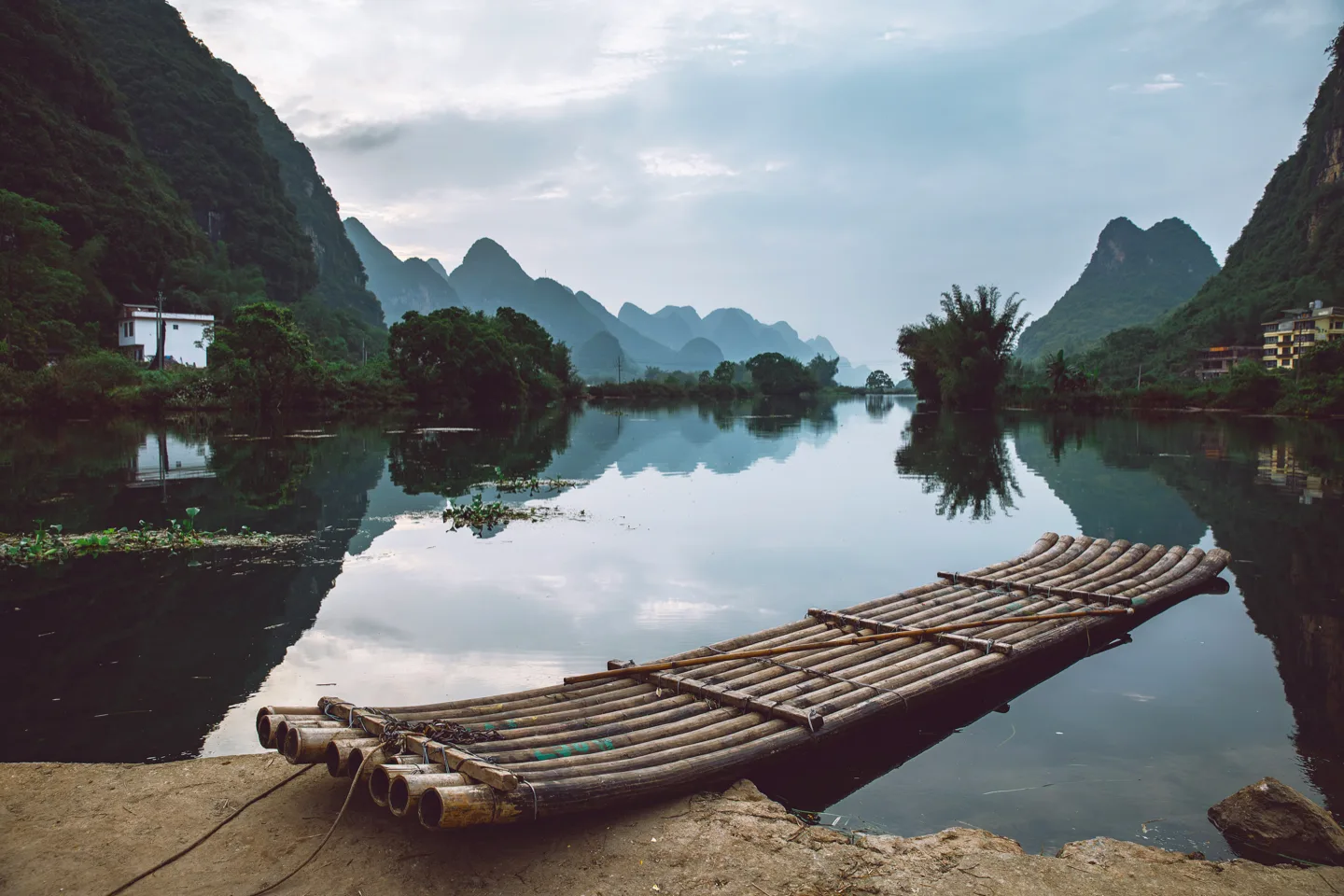
Guilin is a river-and-village route.
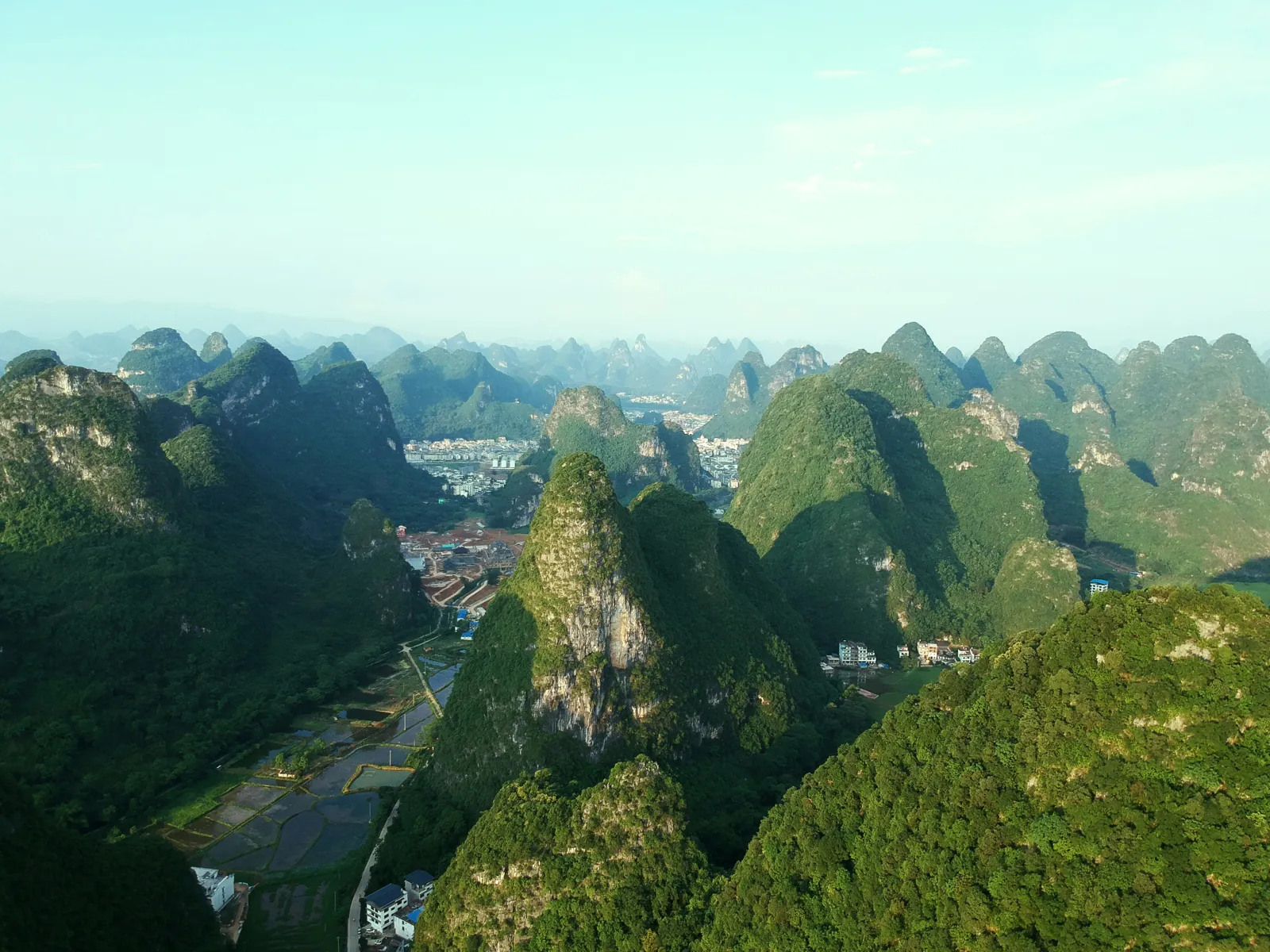
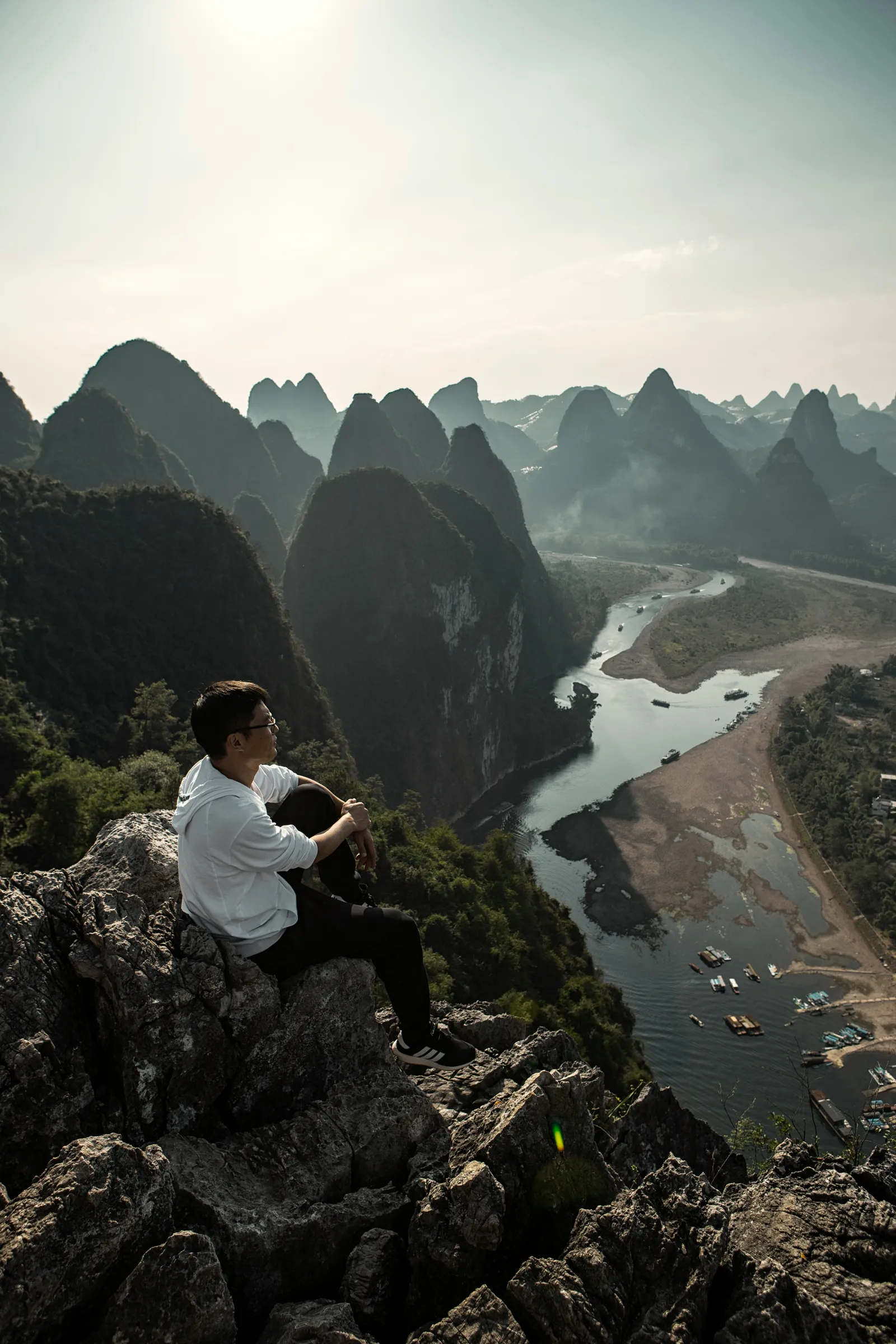
Guilin is the karst-mountain heart of southern China — the dreamlike landscape of jagged green peaks and mirror-still rivers you've seen on the back of the 20-yuan note. The classic trip is the Li River cruise down to Yangshuo, the riverside town that makes the better base for cycling, rafting and the rice-terrace country beyond. It's a complete change of pace from China's big cities, and three days are well spent here.
River-first logistics
| Choice | Best move | Watch for |
|---|---|---|
| Classic cruise | Guilin pier to Yangshuo, then sleep in Yangshuo | You need luggage storage or a transfer plan after the boat. |
| Shorter river day | Yulong River raft from Yangshuo | More flexible, but it is not the famous long Li River route. |
| Longji terraces | Private car or day tour from Guilin | Road time is long; do not pair it with the Li River on the same day. |
| Rain backup | Reed Flute Cave and Guilin lakes | Karst views can vanish in heavy cloud, so keep one flexible half-day. |
River, peaks & terraces
Li River cruise
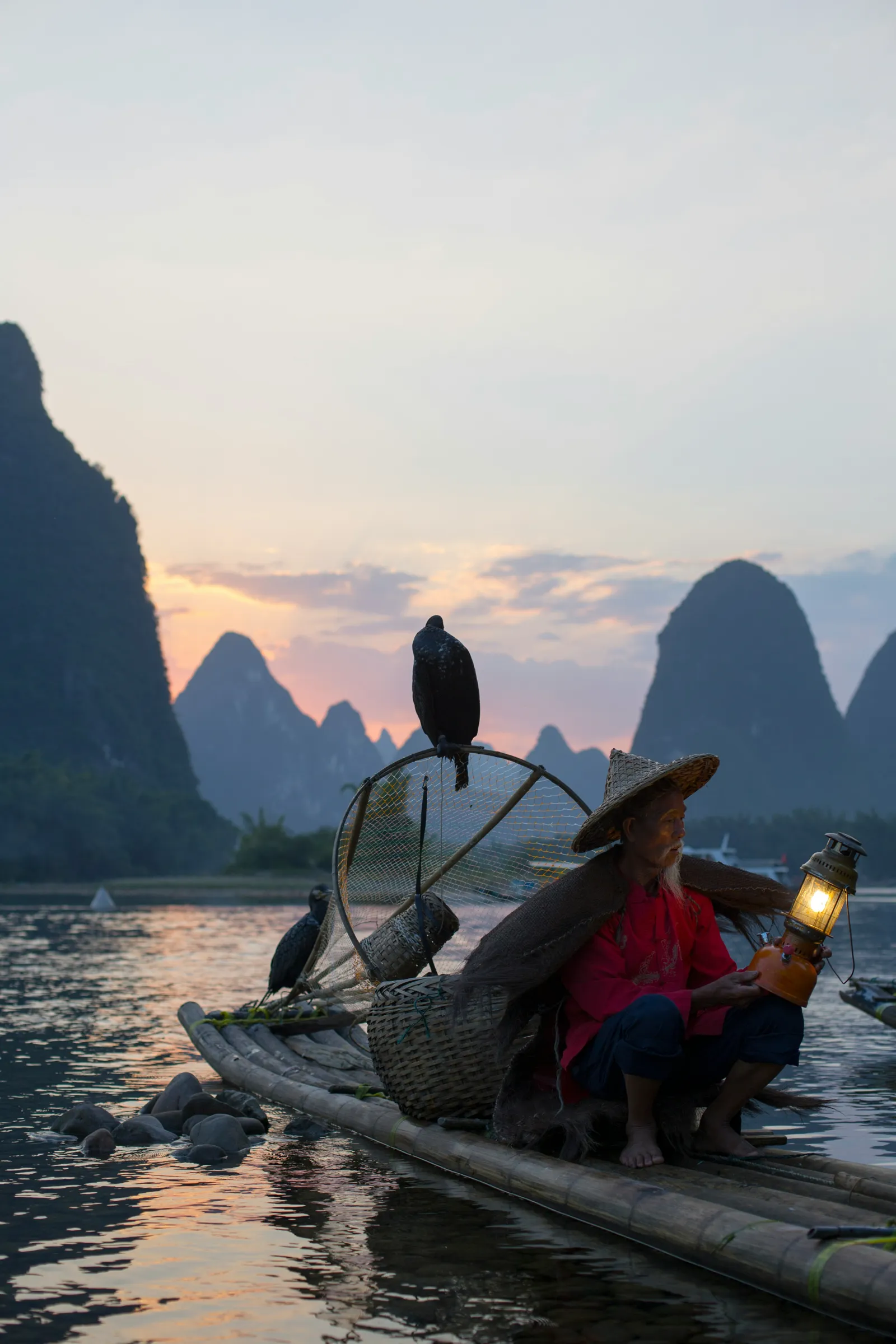
The headline: a 4-5 hour cruise from Guilin down to Yangshuo, drifting past the most famous stretch of karst peaks in China. Book ahead in peak season; most people cruise down and return by bus or train. Book a Li River cruise to Yangshuo.
Yangshuo & the countryside
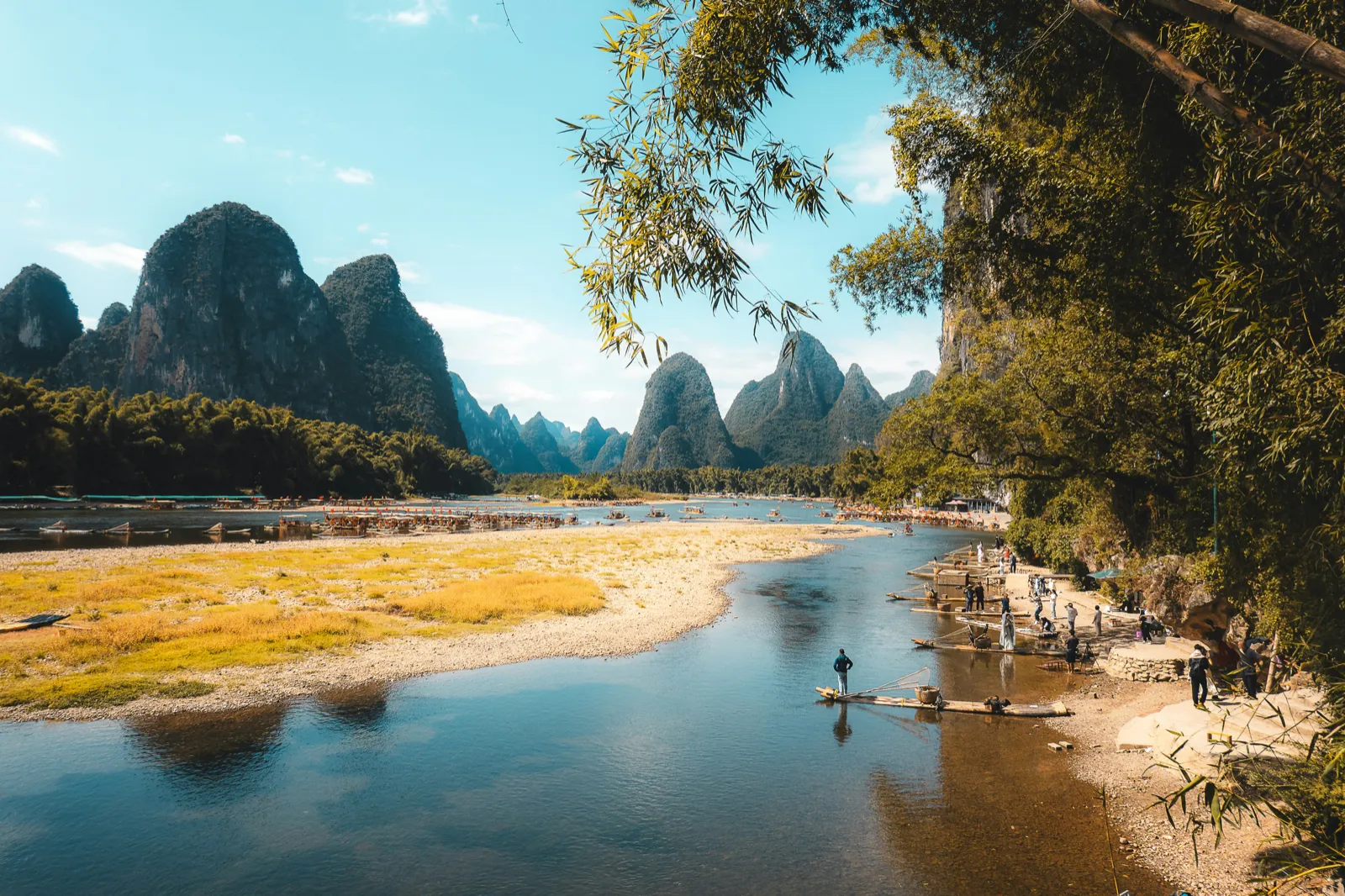
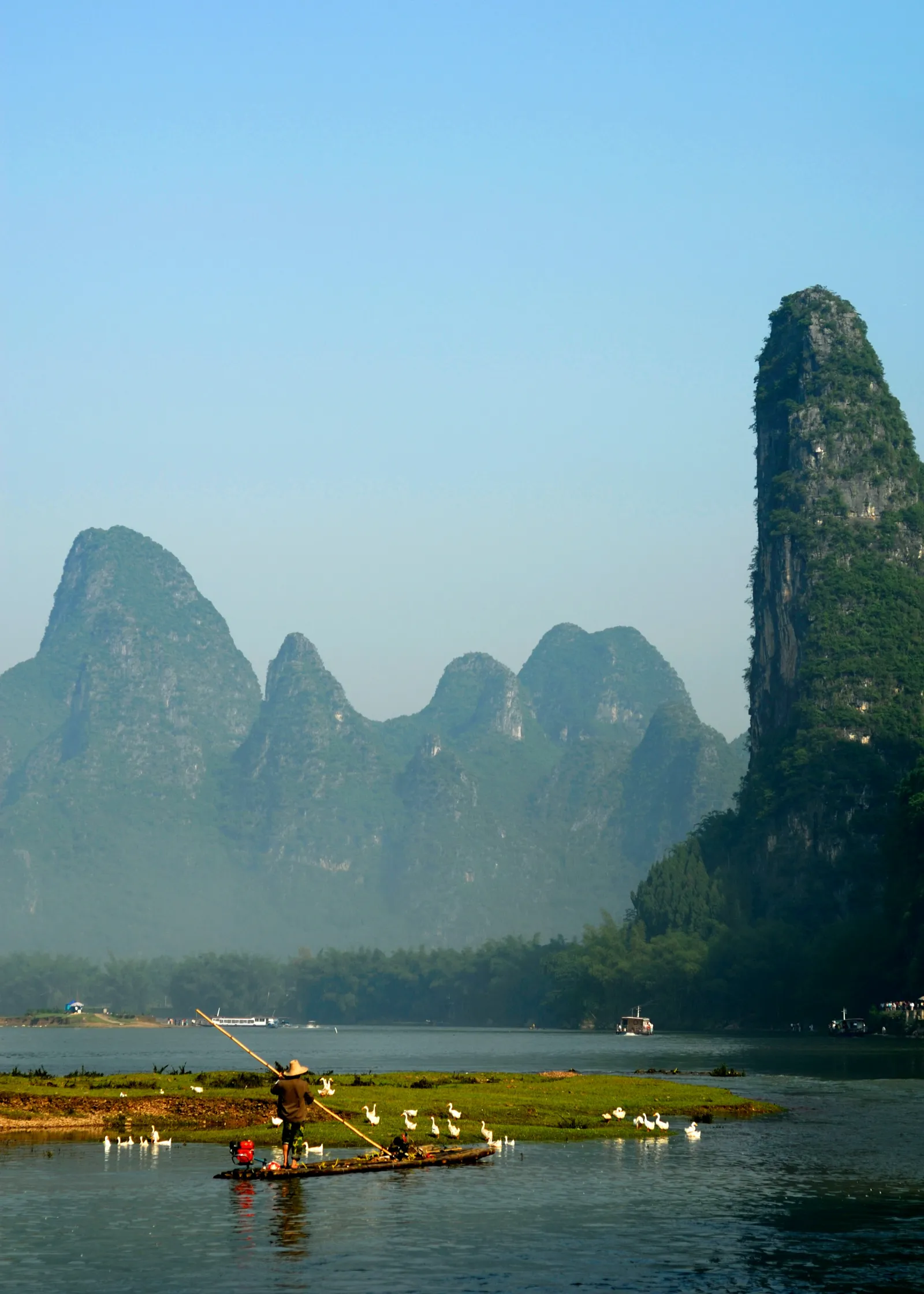
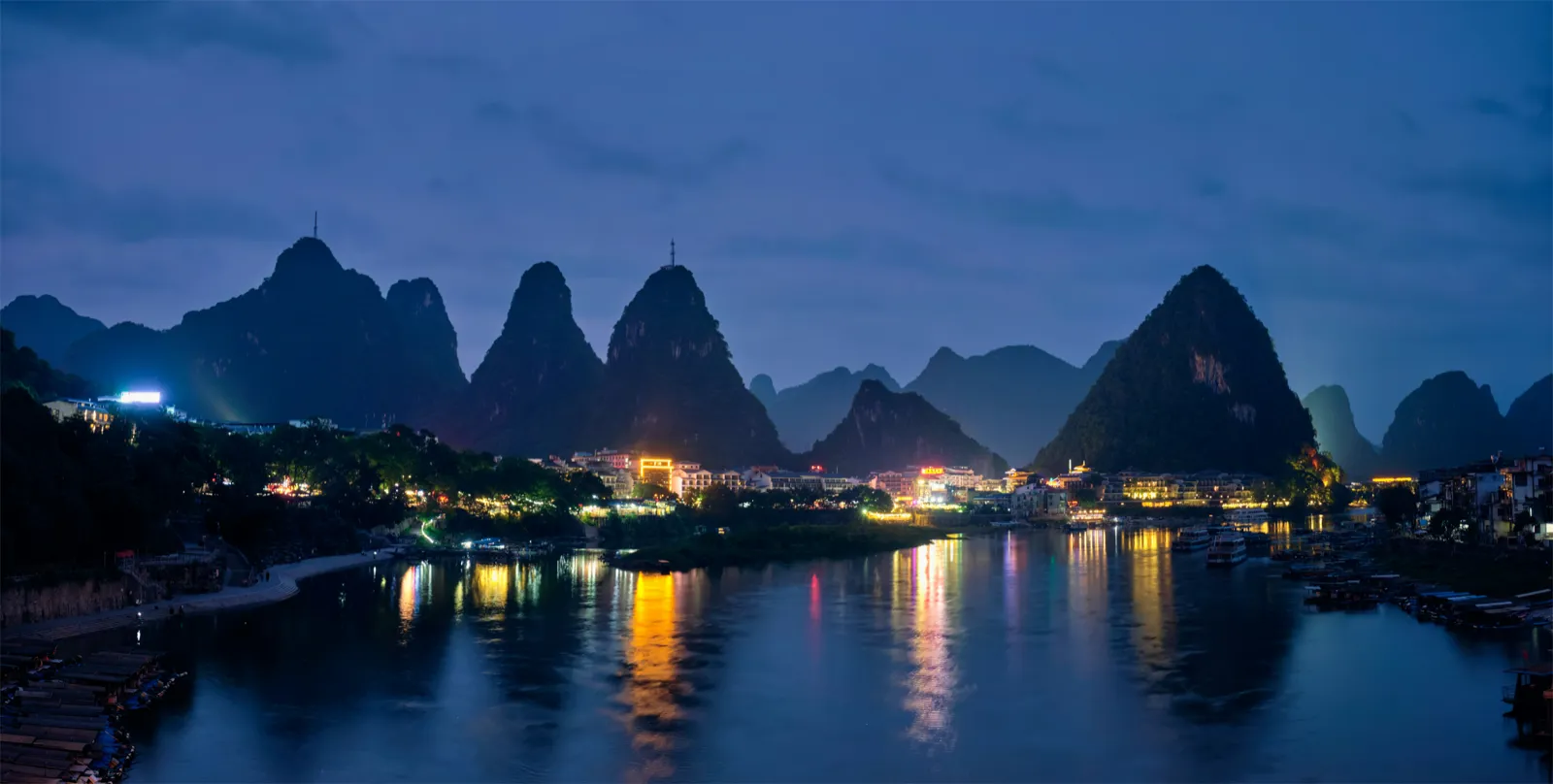
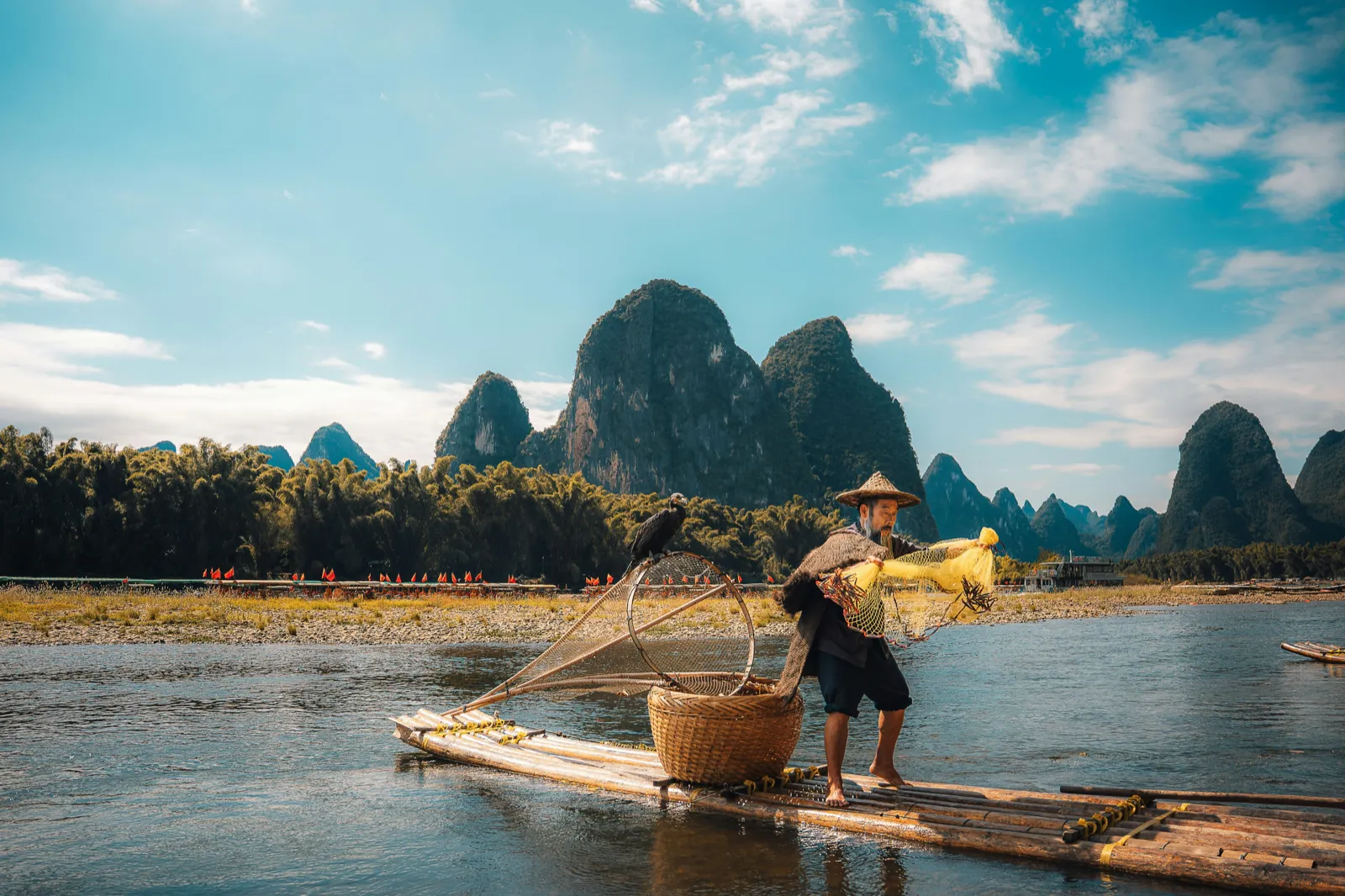
The town at the end of the cruise, ringed by peaks. Rent a bike or e-scooter and ride the rural lanes, raft the gentle Yulong River, and watch the sunset light hit the karst. The best base in the region.
Longji rice terraces
The "Dragon's Backbone" — terraced hillsides curving up the mountains around the Zhuang and Yao villages, about two hours from Guilin. Best in late spring (flooded, mirror-like) or autumn (golden harvest). Book a Longji terraces day tour.
Reed Flute Cave
A vast limestone cave on the edge of Guilin, lit with coloured lights across its stalactites and underground pools. Touristy but genuinely spectacular, and an easy half-day from the city.
Sun & Moon Pagodas
Guilin city's twin lakeside pagodas — one gold, one silver — reflected in Shan Lake and floodlit after dark. A pleasant evening stroll if you have a night in the city itself.
Xianggong Hill & viewpoints
For the postcard aerial shot over a bend in the Li River, climb Xianggong Hill at dawn. Several roadside viewpoints between Guilin and Yangshuo give the classic peaks-over-river panorama.
Guilin or Yangshuo base
The best base for the scenery — walkable to West Street, surrounded by peaks, and the launch point for cycling and rafting. Where most travellers spend their nights.
Boutique guesthouses among the rice fields and karst, a short ride from town. Quieter, with the peaks right outside your window — ideal for a slower stay.
The practical gateway for the airport and high-speed rail. Handy for one night on arrival or departure, but the scenery is downriver in Yangshuo.
For Guilin and Yangshuo, split the question: Guilin city is practical for the airport and rail station, while Yangshuo is the scenic base for cycling, rafting and river views. Search Guilin & Yangshuo stays on Trip.com → Rural guesthouses can be brilliant but should confirm foreign-passport registration before you arrive; the Stay guide explains why.
Guilin and Yangshuo are about 1.5 hours apart by bus or the Li River cruise. Within Yangshuo, rent a bike or e-scooter; for the Longji terraces and farther sights, a day with a driver saves time — book a Guilin–Yangshuo private car charter. Use DiDi for shorter hops, and see getting around China for the high-speed rail in and out.
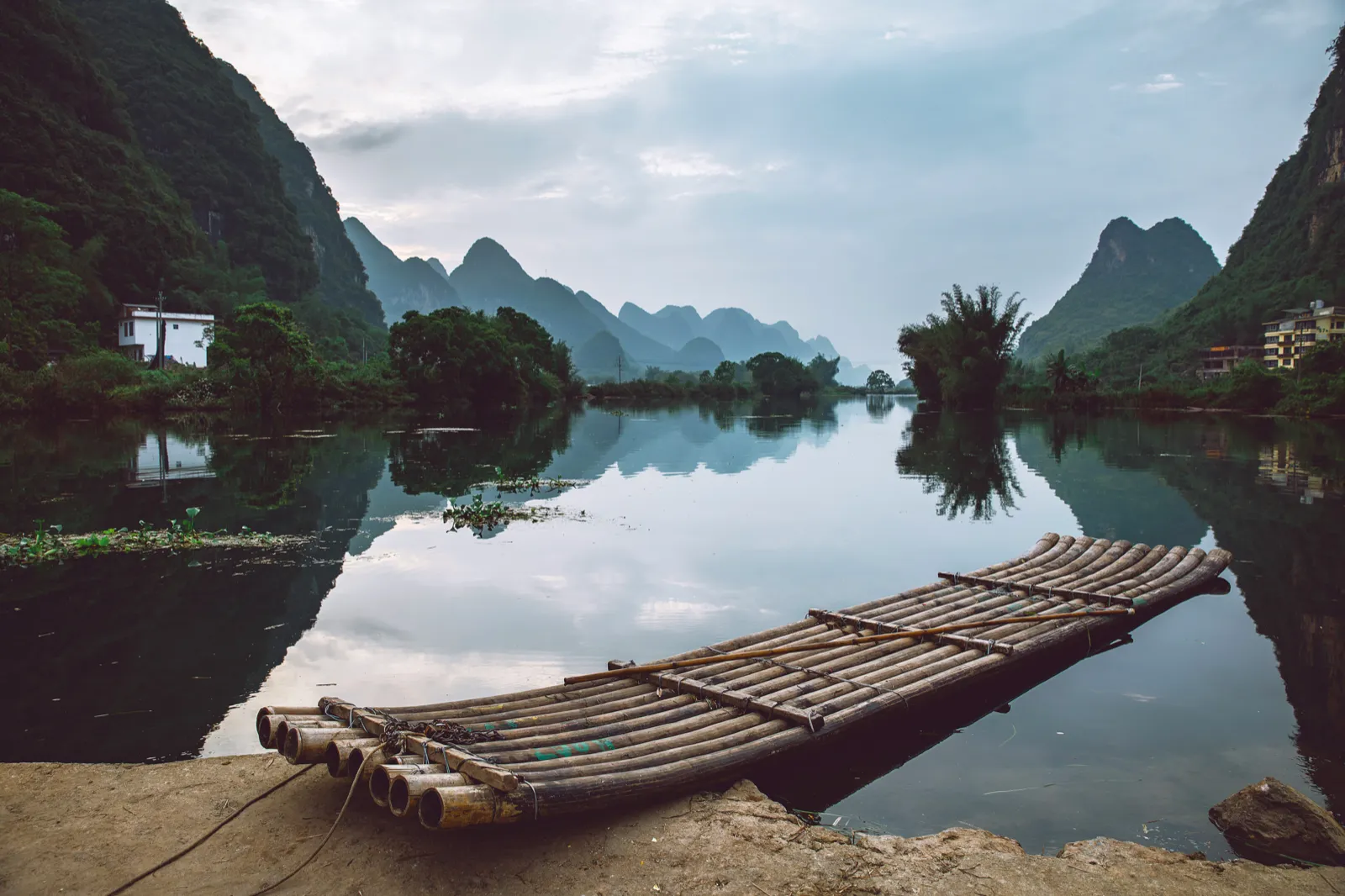
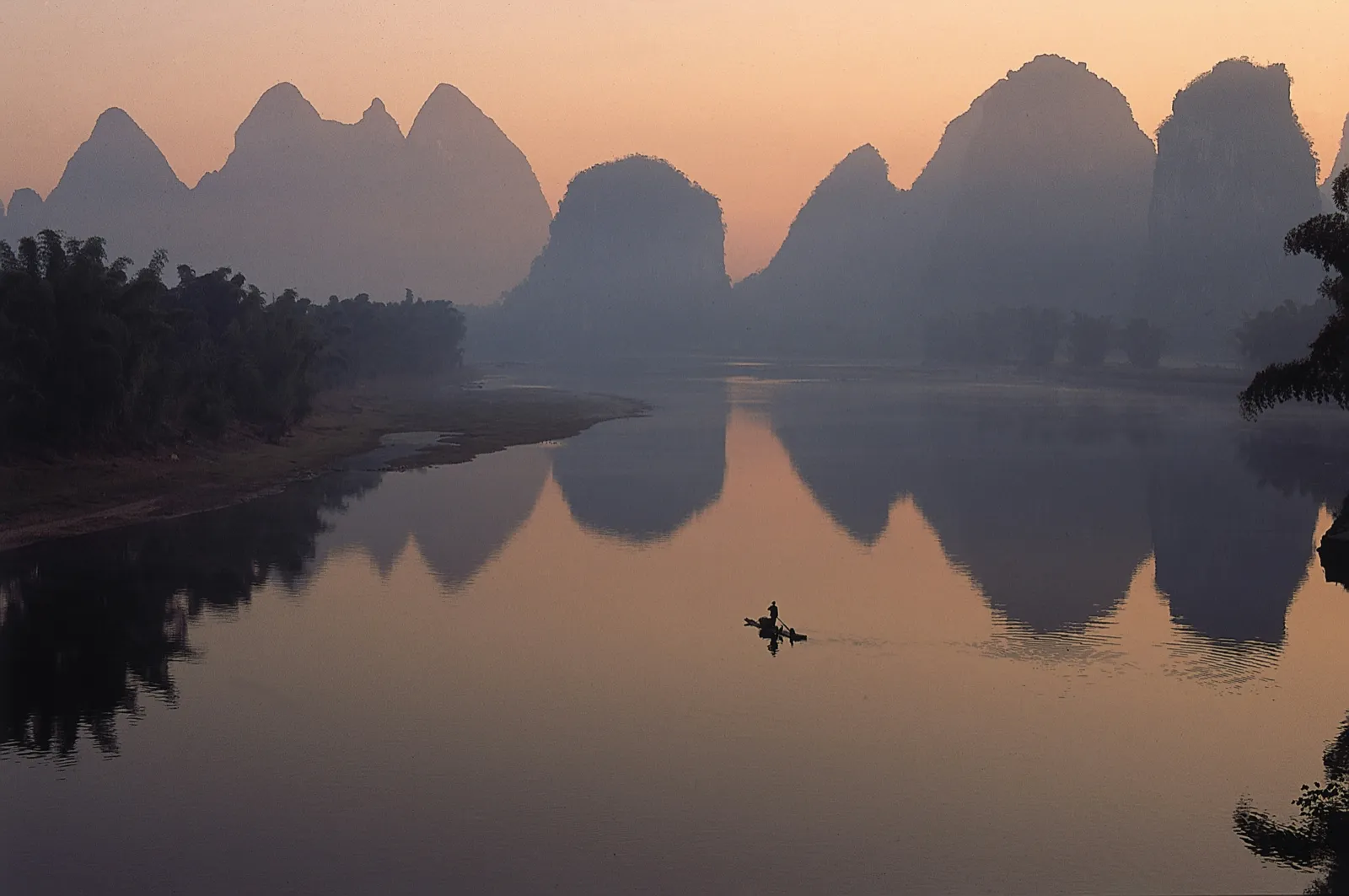
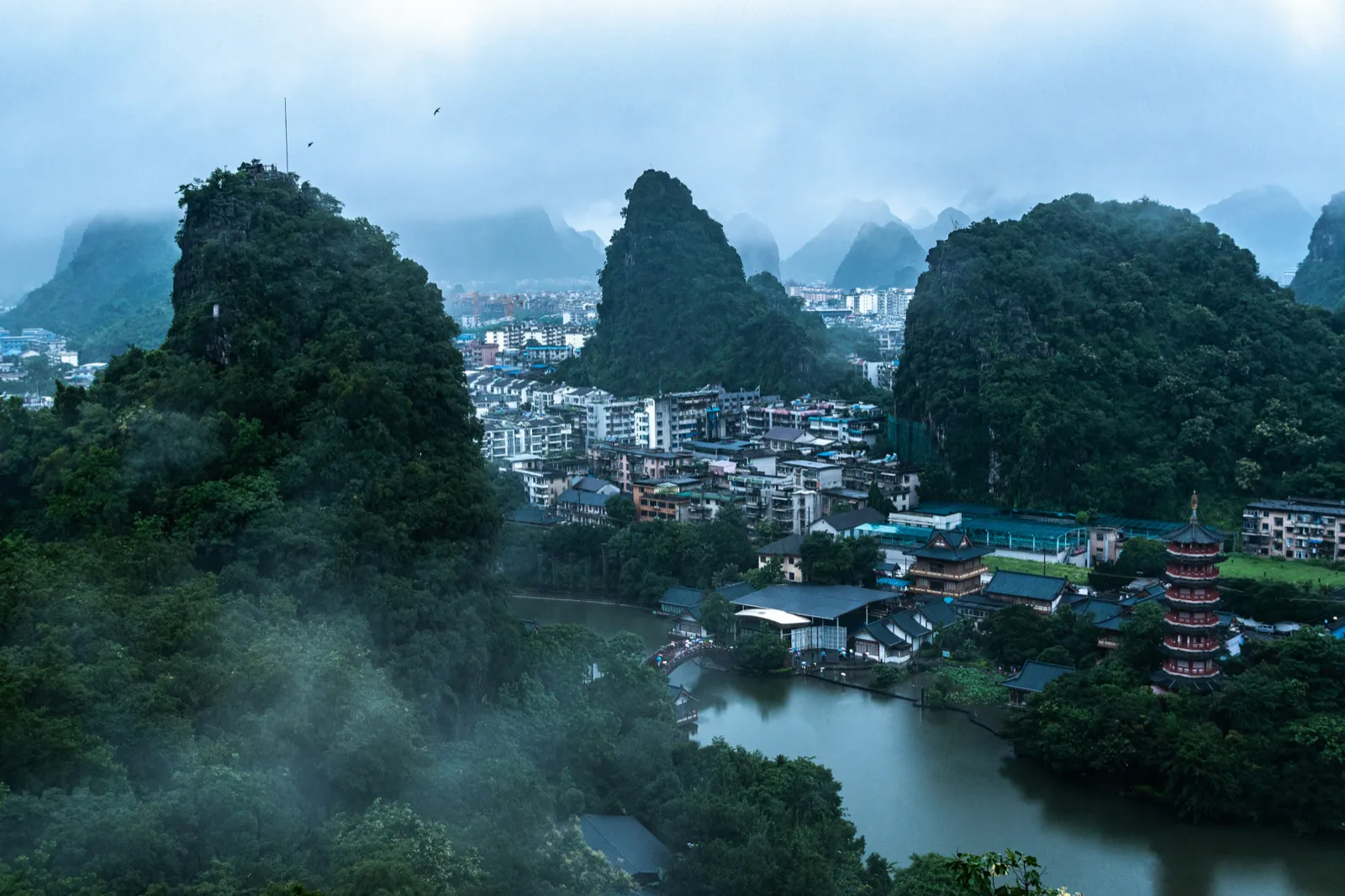
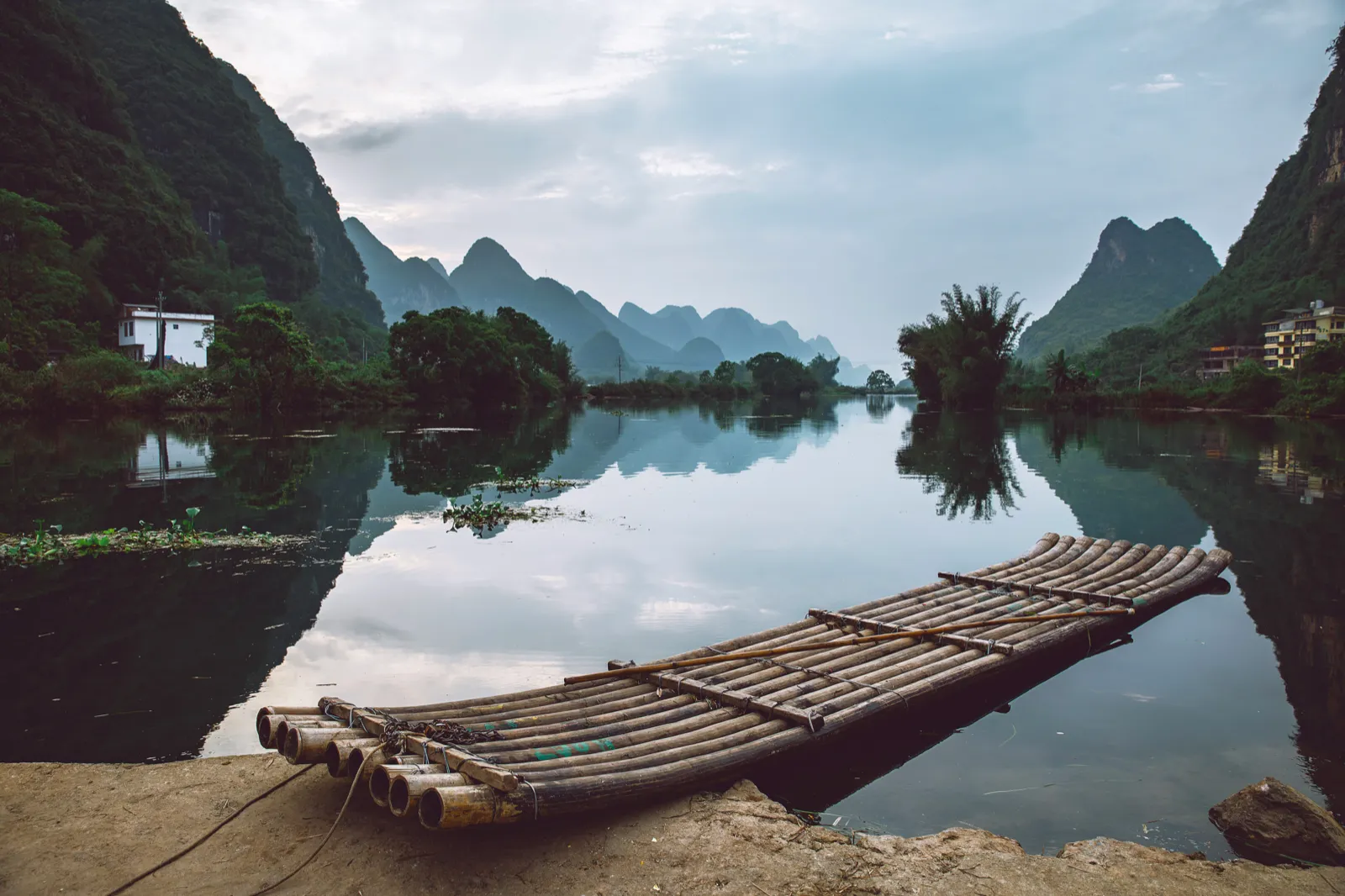
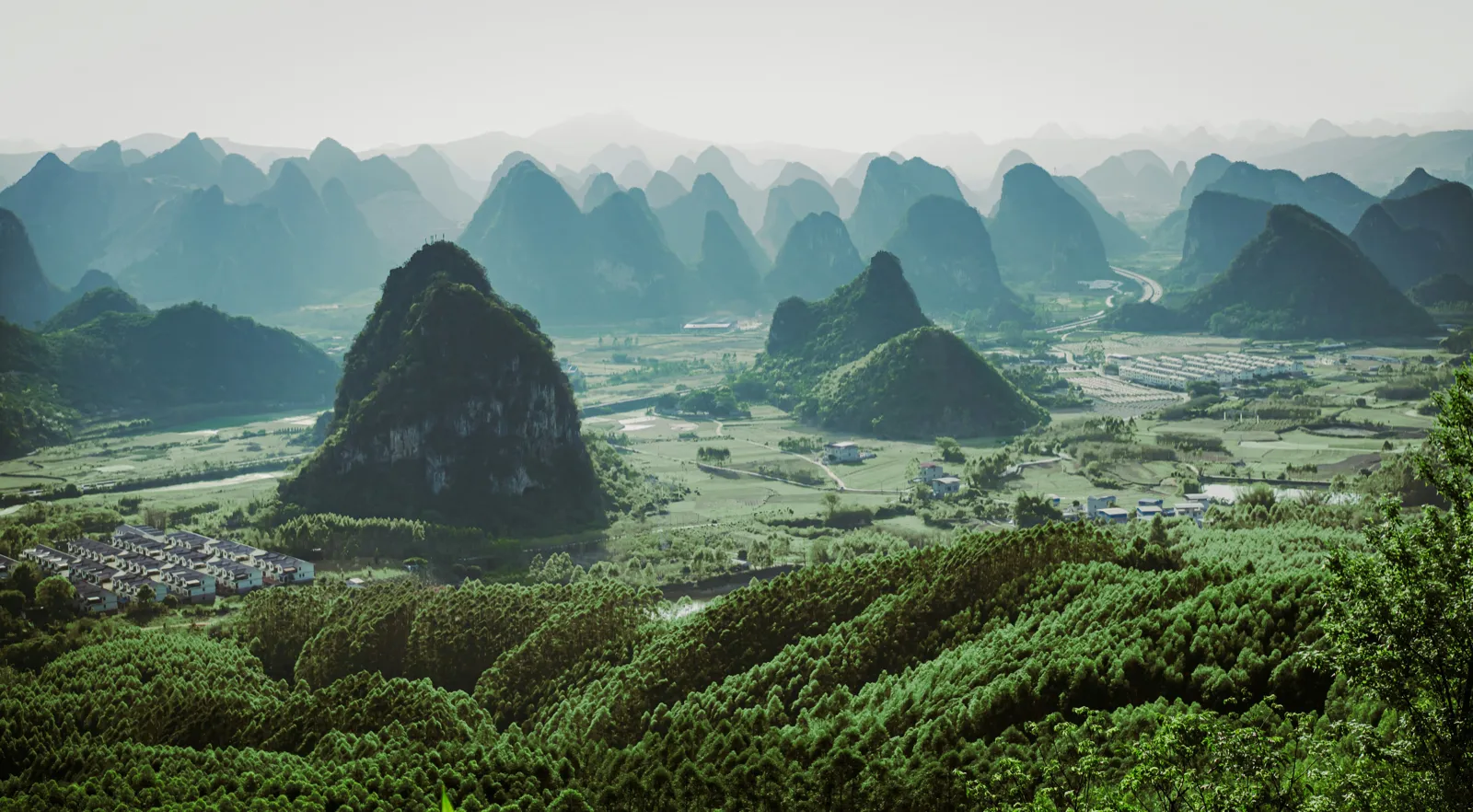
Guilin & Yangshuo in pictures.
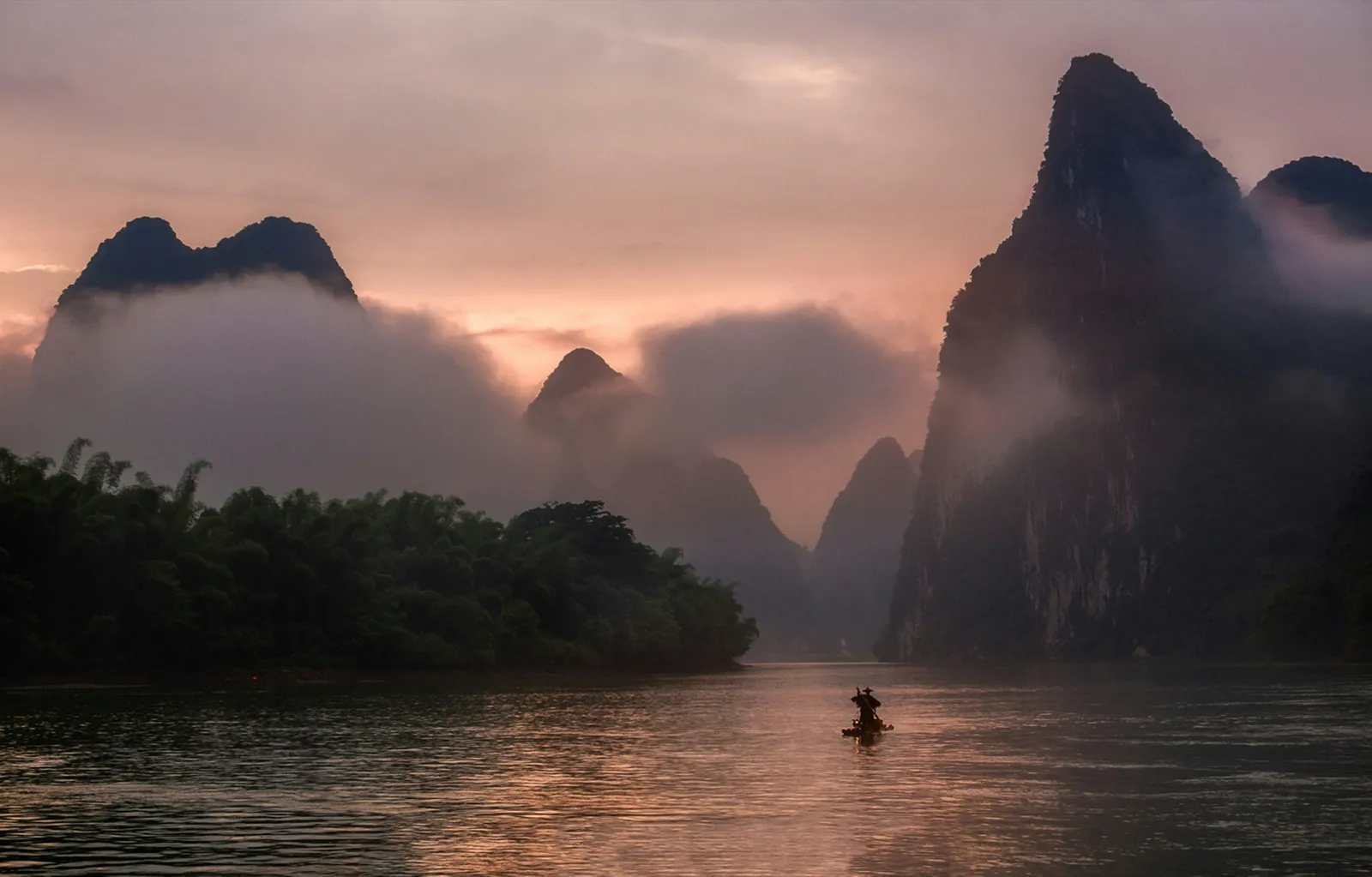
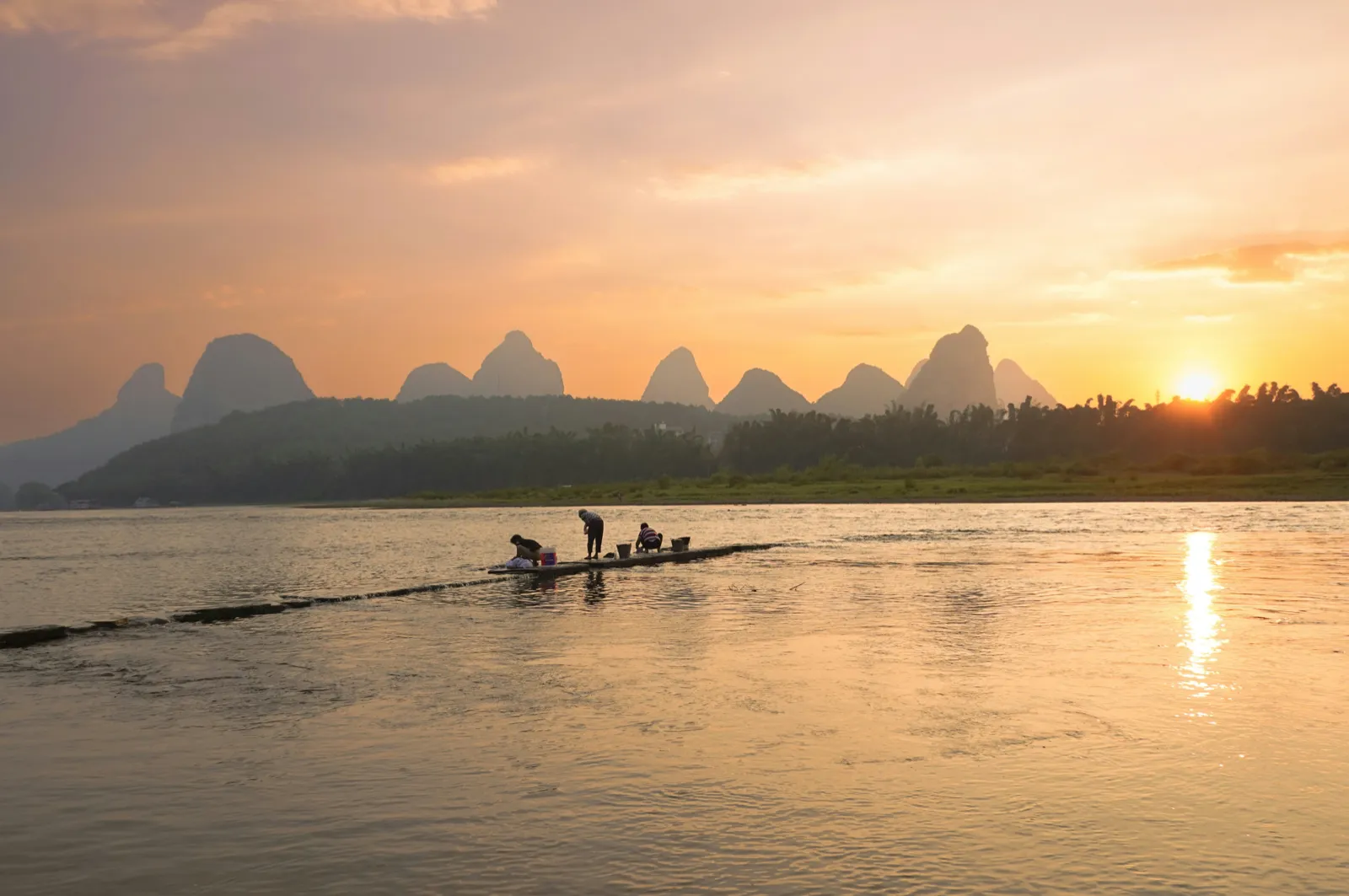
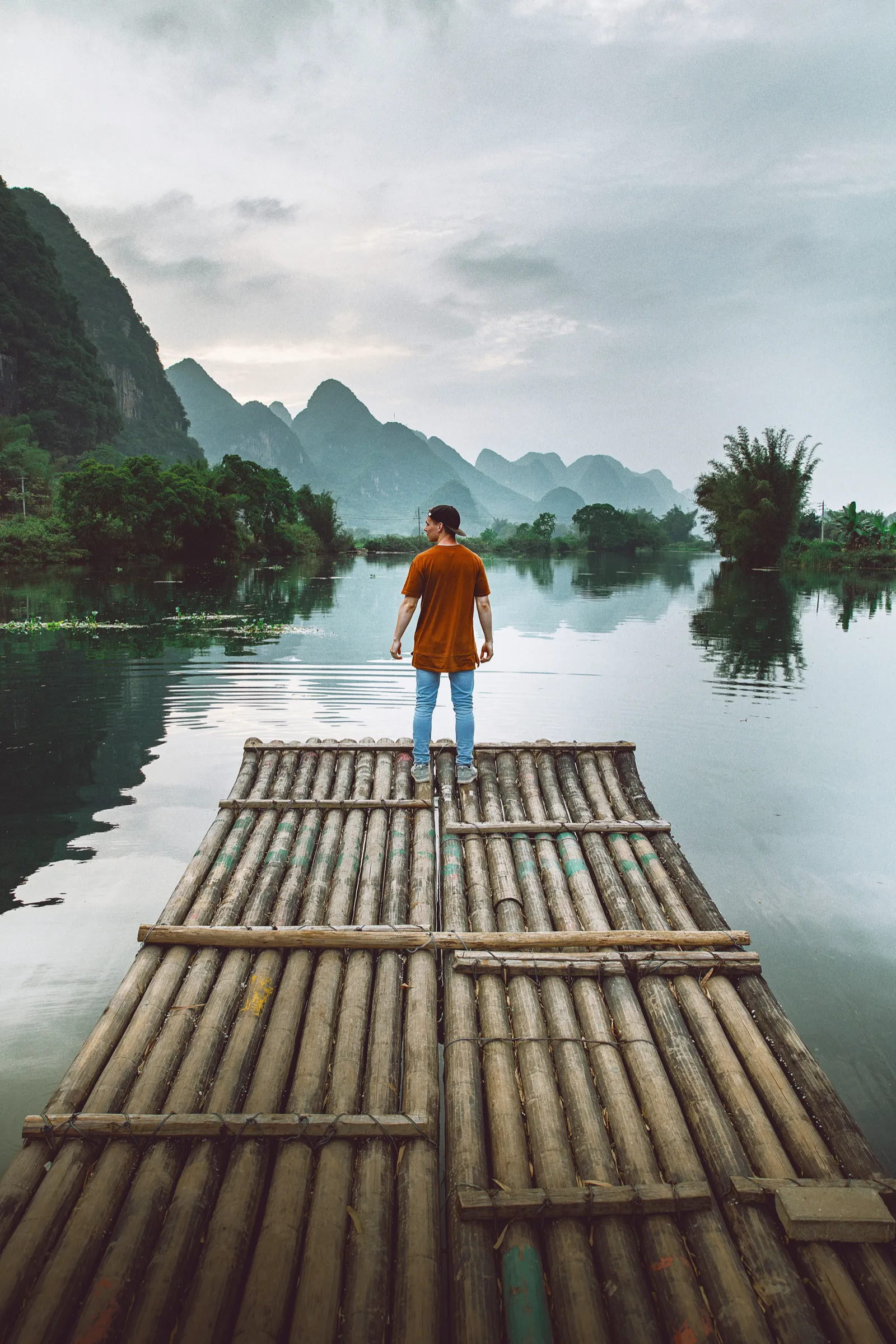
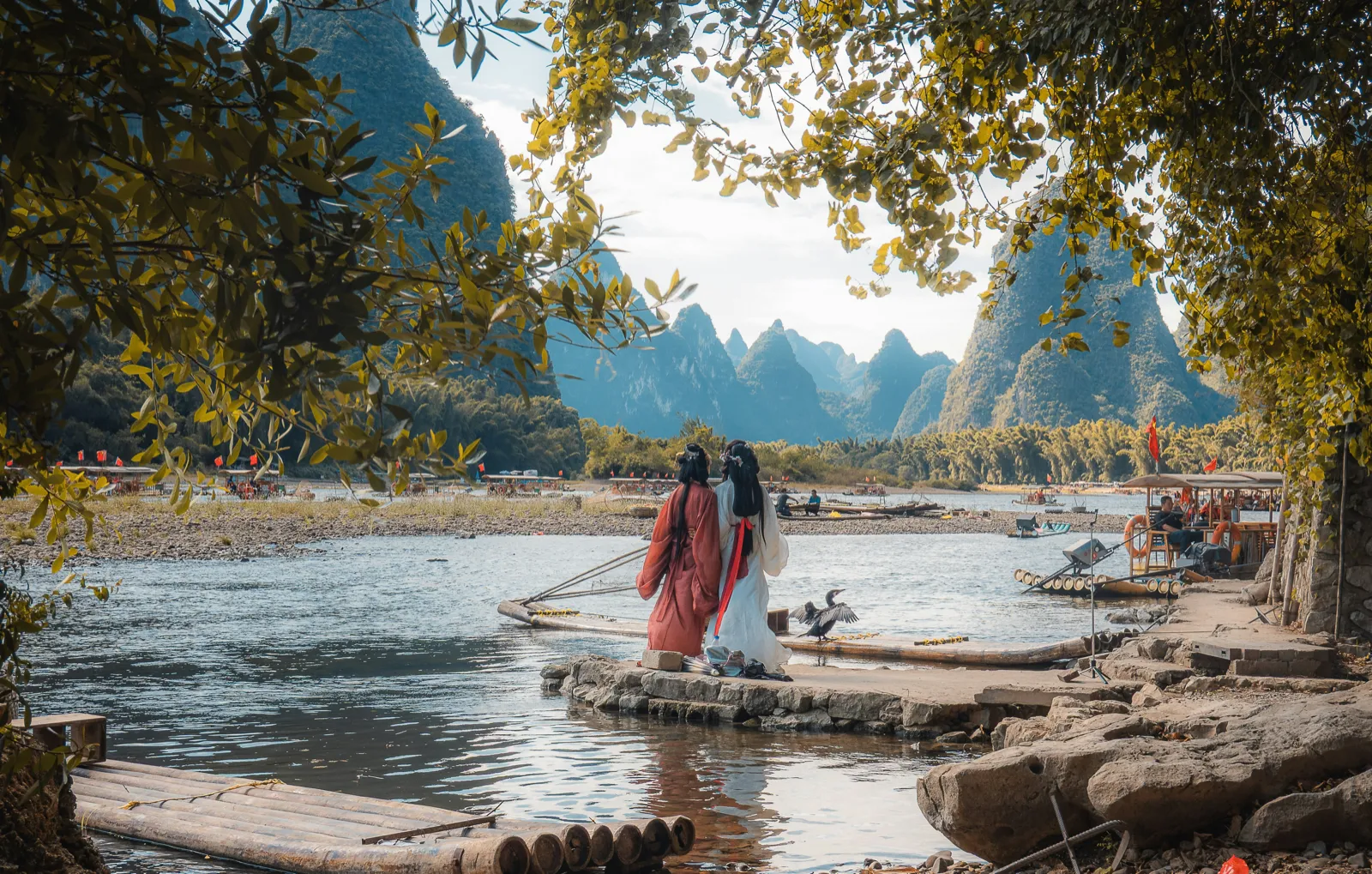
Map point for Guilin.
OpenStreetMap view. For Guilin-Yangshuo moves, confirm the pier or village name in Amap; river cruise pickups can be far from the city centre. DiDi guide.
Weather window for Guilin.
Spring rains keep the Li River full and the karst hills a vivid green, while autumn brings clear, comfortable days — the two windows that make the river cruise and rice terraces look their best.
Heads-up: June to August brings heat, humidity and the wettest skies — heavy rain can swell the river and cloud the views. Winters are mild but grey, and low water can leave the river too shallow for the full cruise.
Holiday crowd check
Li River cruise seats, Yangshuo rooms and Longji cars sell out fastest when holidays meet good weather.
Hold one weather-flexible half-day.
Guilin answers
What is the core Guilin and Yangshuo route?
The headline is the Li River cruise from Guilin down to Yangshuo, drifting for hours past the karst peaks you’ve seen on the back of the 20-yuan note. Around it: cycle the countryside and rivers near Yangshuo, day-trip to the Longji rice terraces, see the Reed Flute Cave, and ride the Sun and Moon Pagodas reflected in Guilin’s lakes at night.
Is three days enough for the river and rice terraces?
Three days is the sweet spot: one for the Li River cruise from Guilin to Yangshuo, one cycling and exploring around Yangshuo, and one for the Longji rice terraces. With only two days, do the cruise and base yourself in Yangshuo. High-speed trains make Guilin easy to fold into a wider China route.
How do you do the Li River cruise from Guilin to Yangshuo?
The classic route is a 4-5 hour boat cruise from Guilin’s Zhujiang or Mopanshan pier down to Yangshuo, past the most famous stretch of karst scenery. Book ahead in peak season. A cheaper, shorter alternative is a bamboo-raft trip on the Yulong River near Yangshuo. Most travellers cruise down and take a bus or train back.
Should I sleep in Guilin city or Yangshuo?
Yangshuo, for most travellers. Guilin city is the practical gateway for the airport and high-speed rail, but Yangshuo — the town at the end of the Li River cruise — sits among the peaks and is the better base for cycling, rafting and the countryside. Stay in Guilin for one night on arrival or departure, and in Yangshuo for the scenery.
Why add Guilin to a city-heavy China trip?
Yes — the Li River and Yangshuo karst landscape is some of the most iconic scenery in China and unlike anywhere else in the country. It is a complete change of pace from the big cities, built around rivers, peaks and rice terraces rather than monuments, and three days here balance a city-heavy China itinerary beautifully.
Disclosure — Li River cruises, transfers and stay links may pay us a commission. We recommend Yangshuo because it solves the scenery logistics, not because of any one booking partner. Editorial policy.